Ethereum Staking: A Complete Guide to Running a Validator
Introduction
Ethereum staking represents a fundamental shift in how the network achieves consensus. Since the Merge, Ethereum has transitioned from proof-of-work to proof-of-stake, requiring validators to stake 32 ETH to participate in block production and attestation. This guide walks through the complete process of setting up and running an Ethereum validator, from storage configuration to client diversity considerations.
1. Storage Configuration
One of the first critical steps in validator setup is configuring adequate storage for both execution and consensus layer clients. Validators require substantial storage capacity to maintain the full blockchain state and historical data.
Storage Requirements
- Execution Layer: Requires hundreds of GB on mainnet (scaled down on testnets)
- Consensus Layer: Additional storage for beacon chain data
- Separate Directories: Configure distinct data directories for EL and CL clients
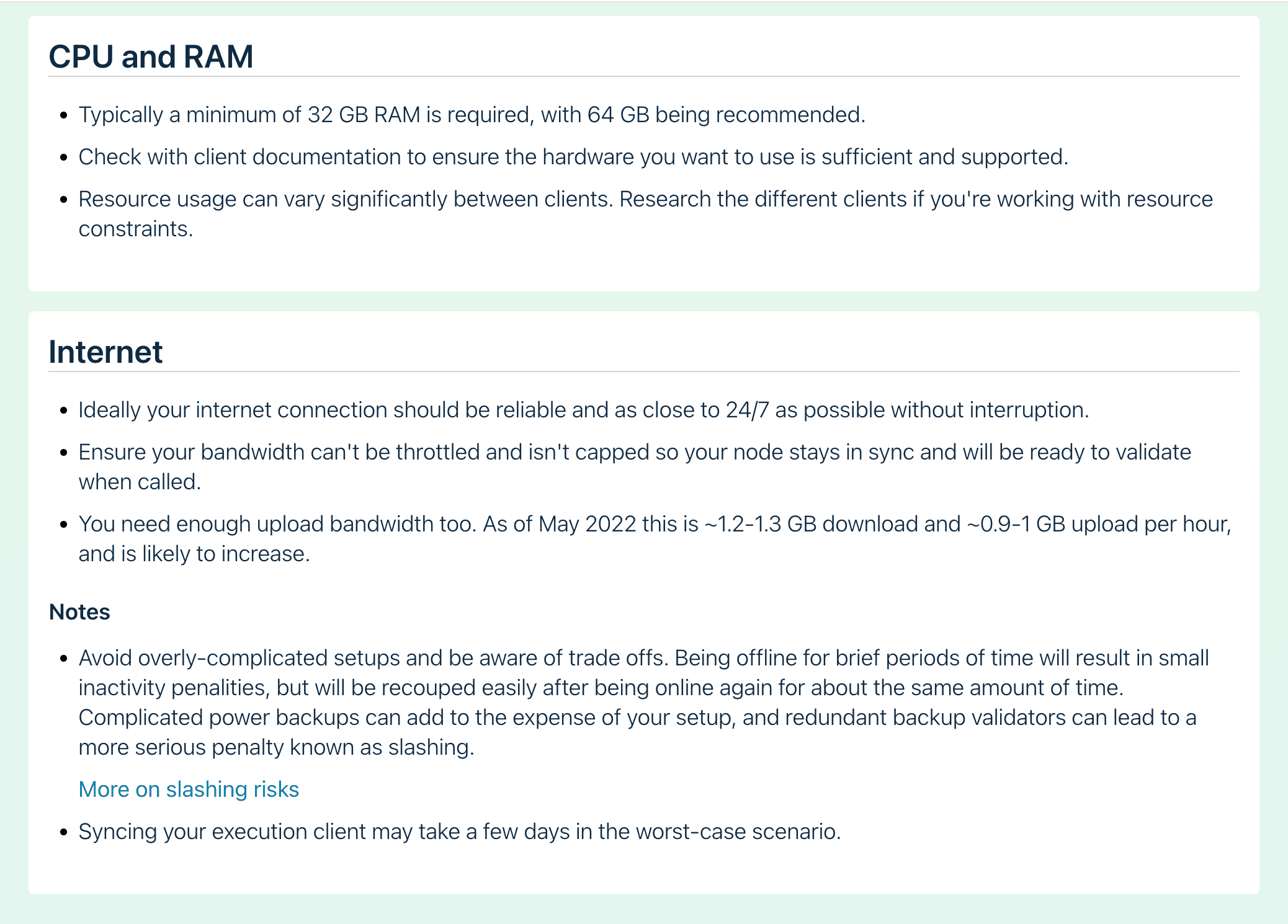
In my setup, I configured separate storage paths to reflect real-world validator requirements:
# Execution Layer Data Directory
~/hoodi-geth

# Consensus Layer Data Directory
~/hoodi-lighthouse
This separation ensures that execution and consensus layer data remain organized and can be managed independently. While testnet requirements are scaled down, the architecture mirrors mainnet deployment, making it an excellent learning environment.
2. Staking 32 Ether to Beacon Chain Deposit Contract
The core requirement for becoming an Ethereum validator is staking 32 ETH (or the testnet equivalent) to the beacon chain deposit contract. This process involves generating validator keys and preparing deposit data.
Validator Key Generation
The Ethereum deposit CLI tool is used to generate validator keys and deposit data:
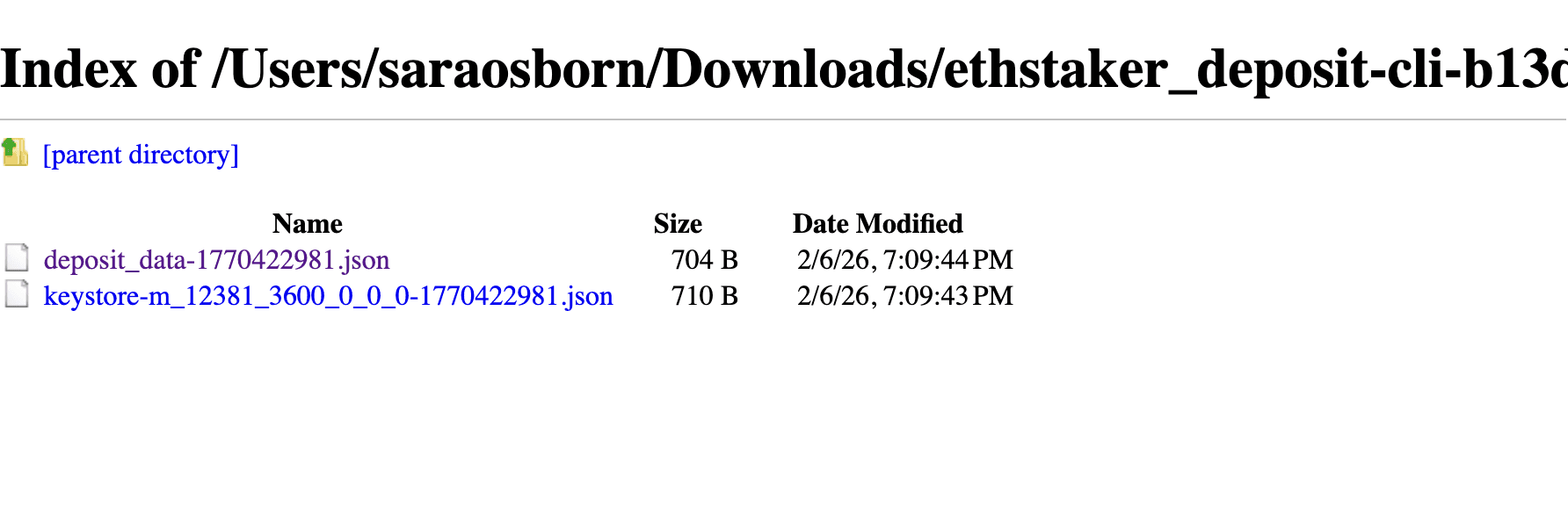
- Generate validator keys using the deposit CLI
- Create
deposit_data.jsonfor the beacon chain deposit - Connect to the beacon chain deposit flow
- Use testnet tokens (HoodiETH) instead of real ETH on testnets
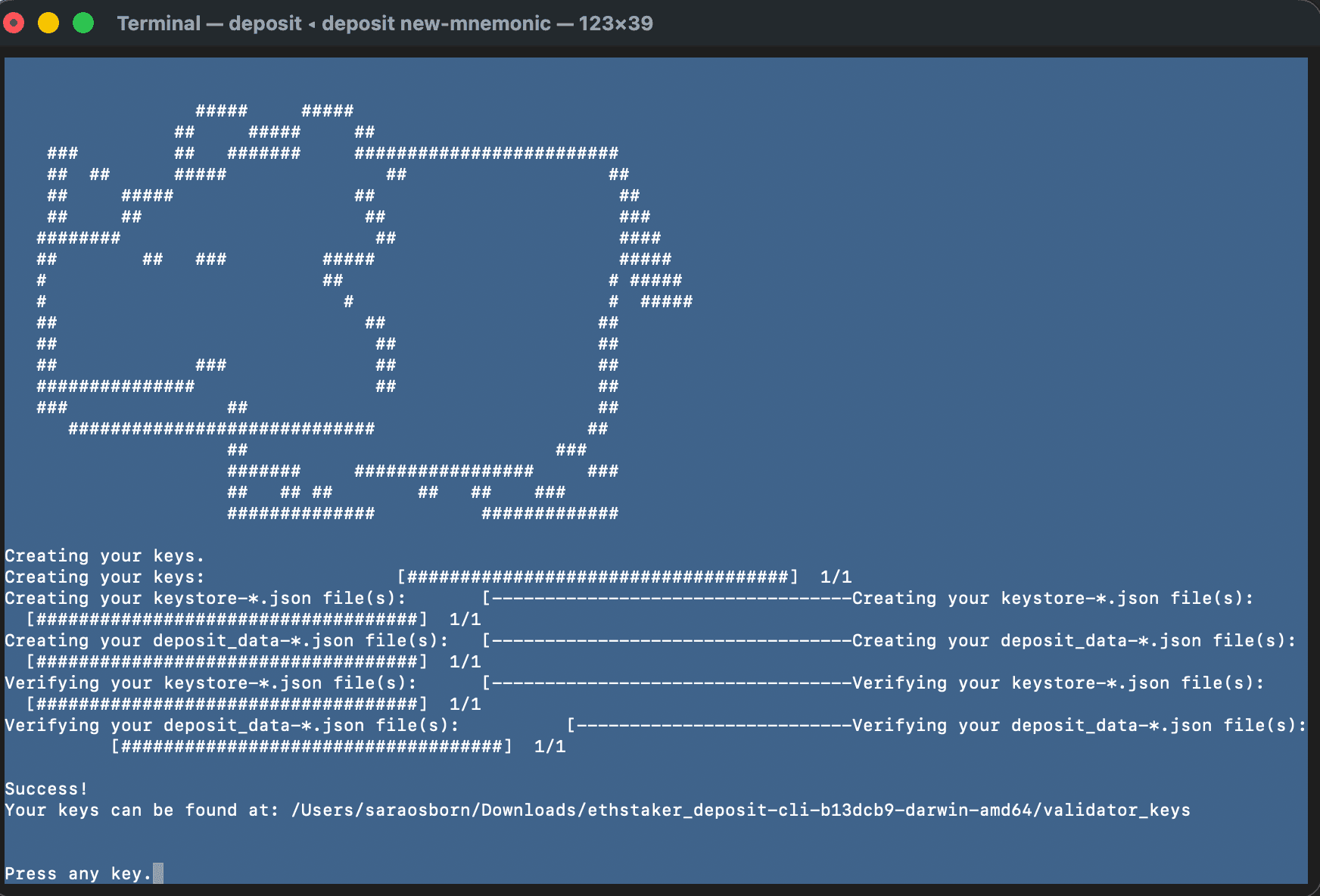
On testnets like Hoodi, validators still use the 32 ETH equivalent (32 HoodiETH), but these tokens are obtained from faucets rather than requiring real economic value. This allows for safe experimentation and learning without financial risk.
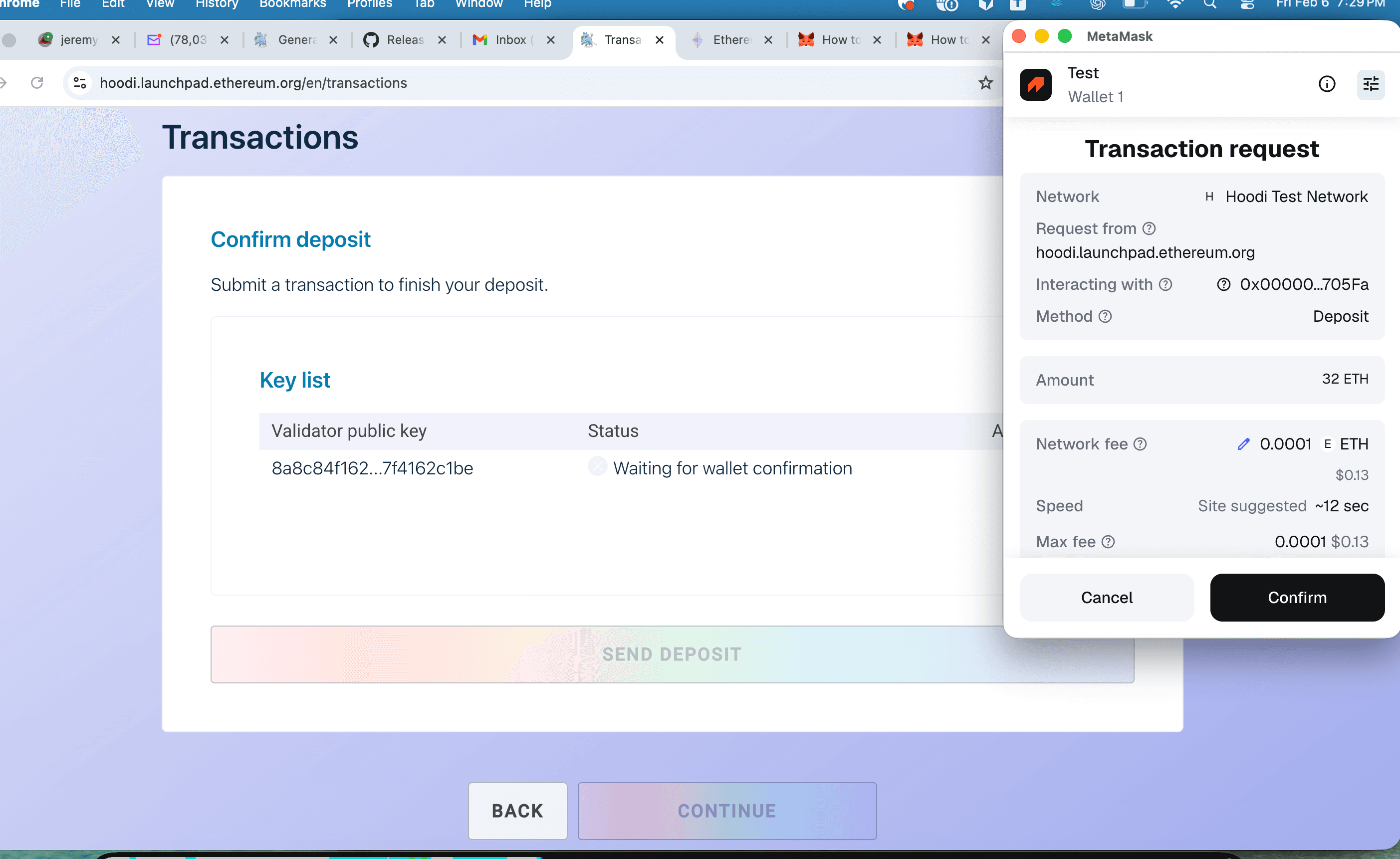
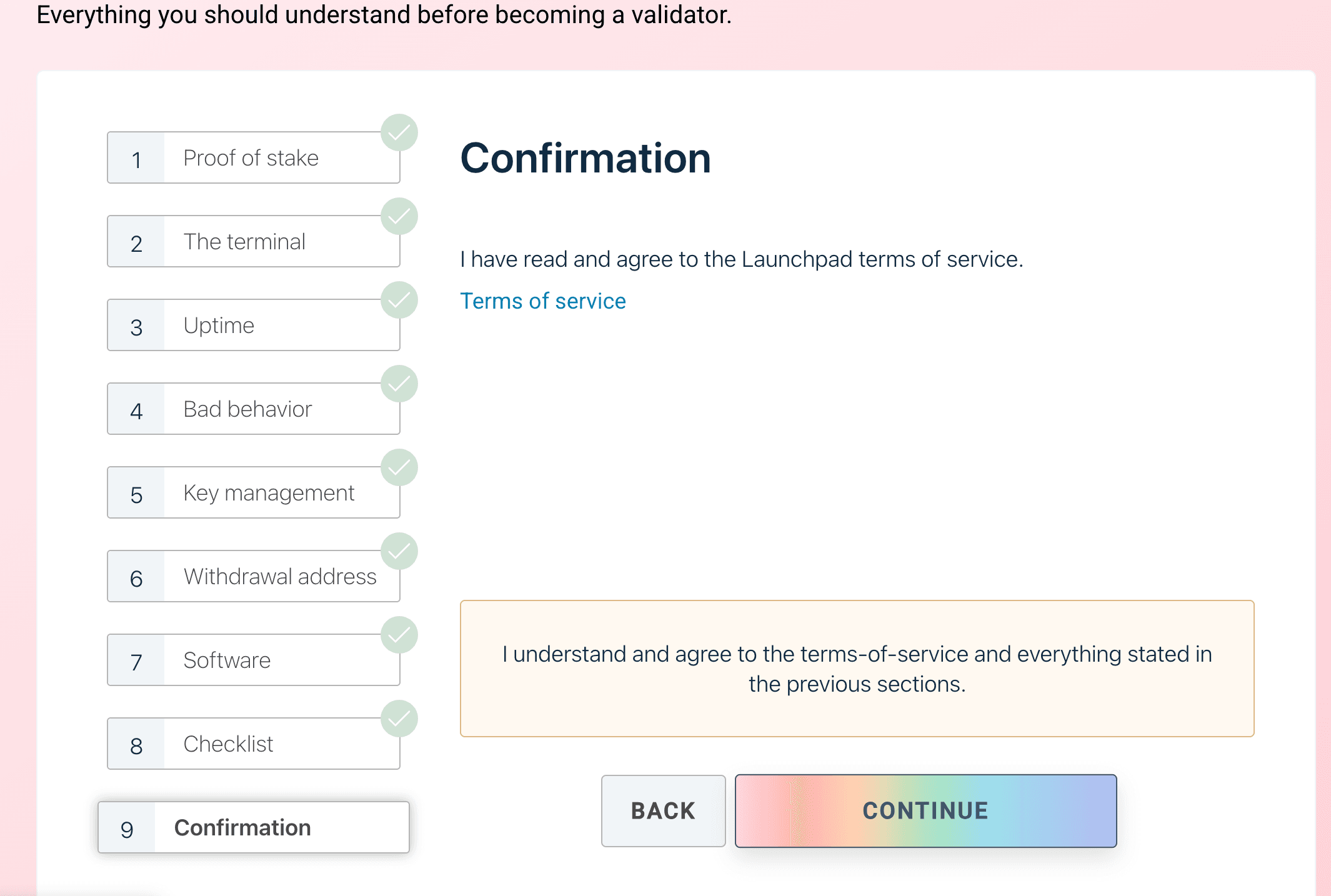
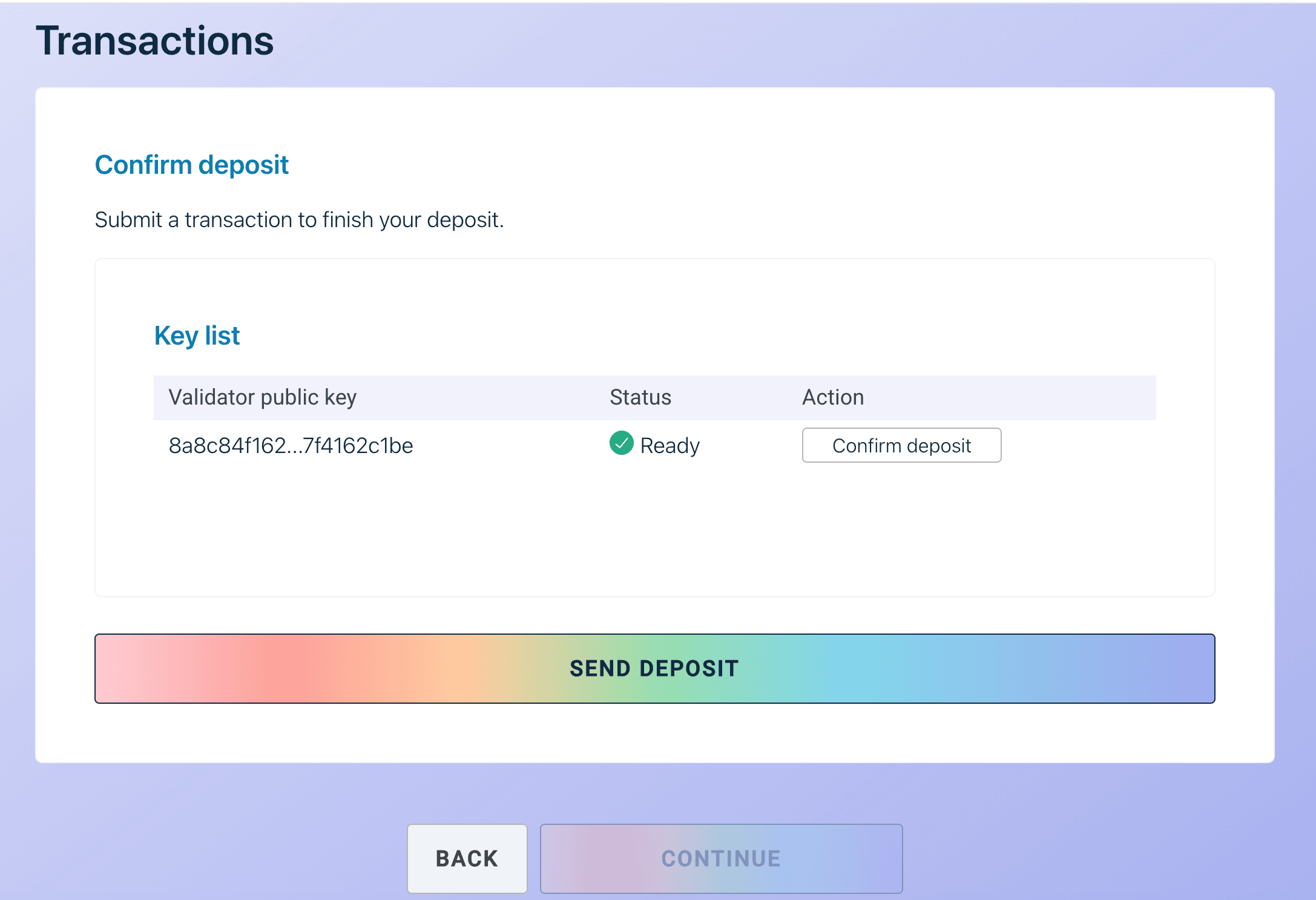
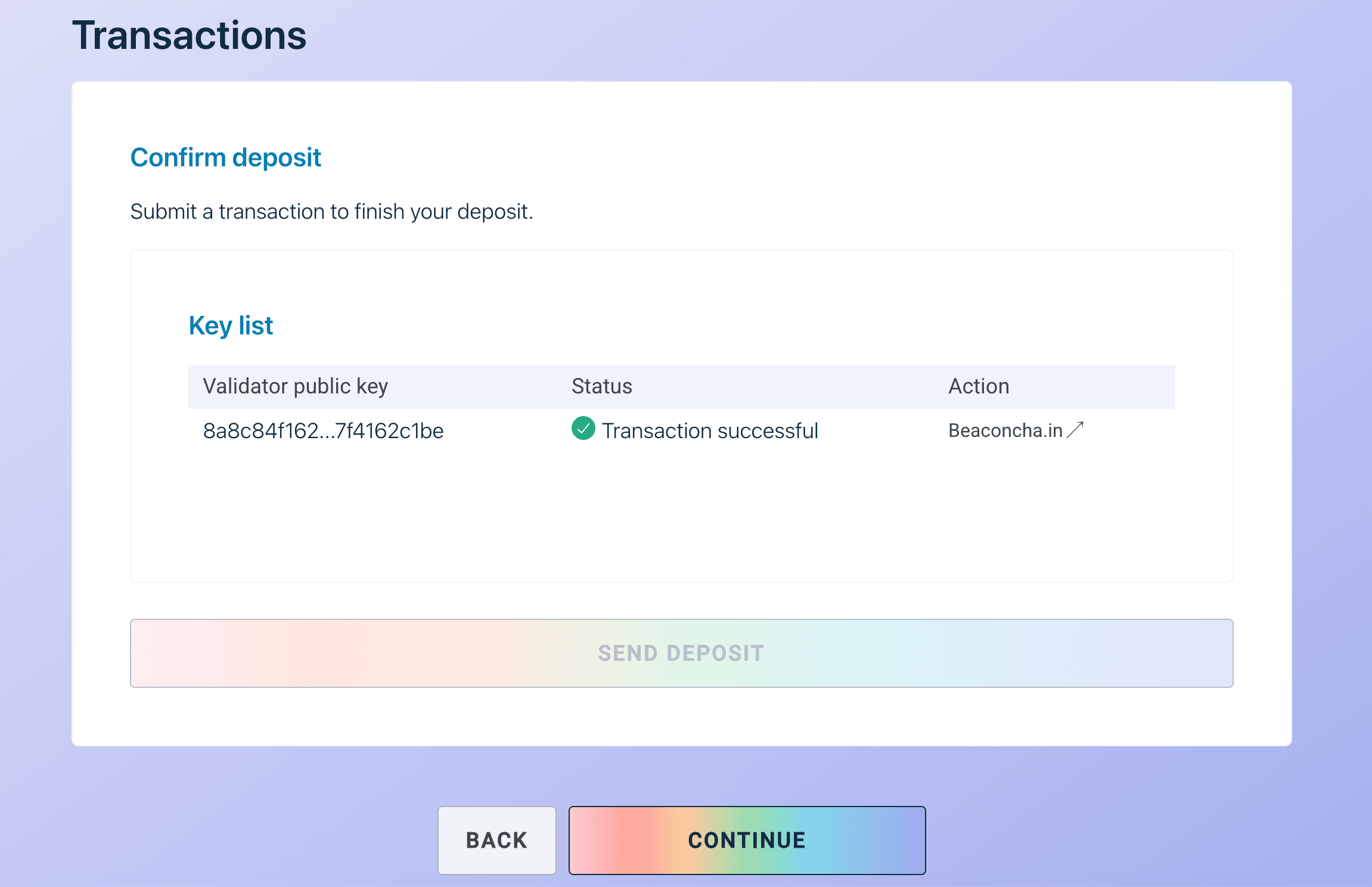
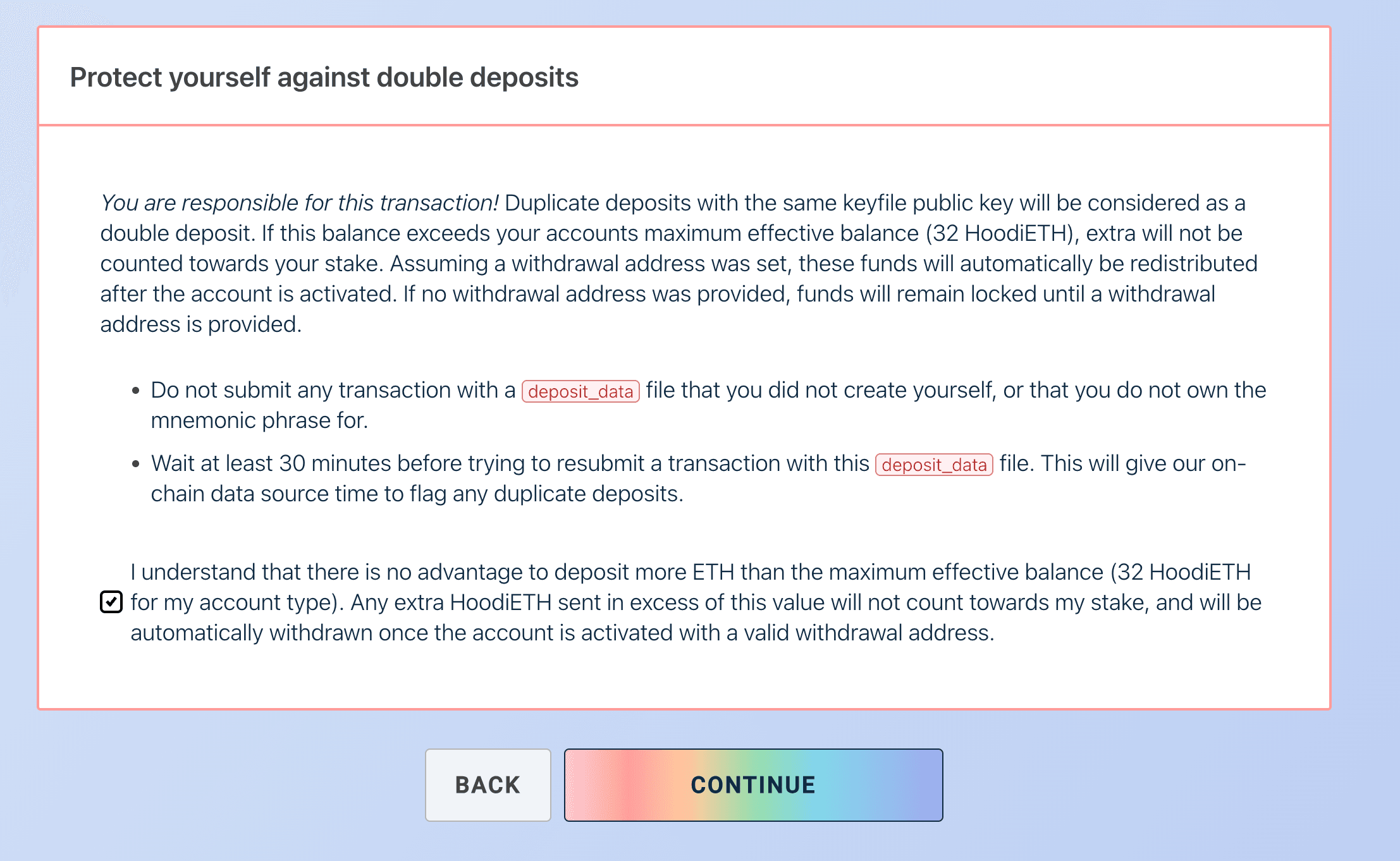
The deposit process connects your validator keys to the beacon chain, enabling your validator to participate in consensus once activated. The deposit contract serves as the entry point for new validators joining the network.
3. Attestations and Rewards
Once a validator is activated, it begins producing attestations—votes on the validity of blocks and the state of the chain. Attestations are the primary way validators contribute to consensus and earn rewards.
Validator Services
When the validator client starts successfully, you'll see confirmation of active services:
- Attestation Production Service: Creates and broadcasts attestations
- Block Production Service: Proposes blocks when selected
- Validator Registration: Registers the validator with the beacon chain
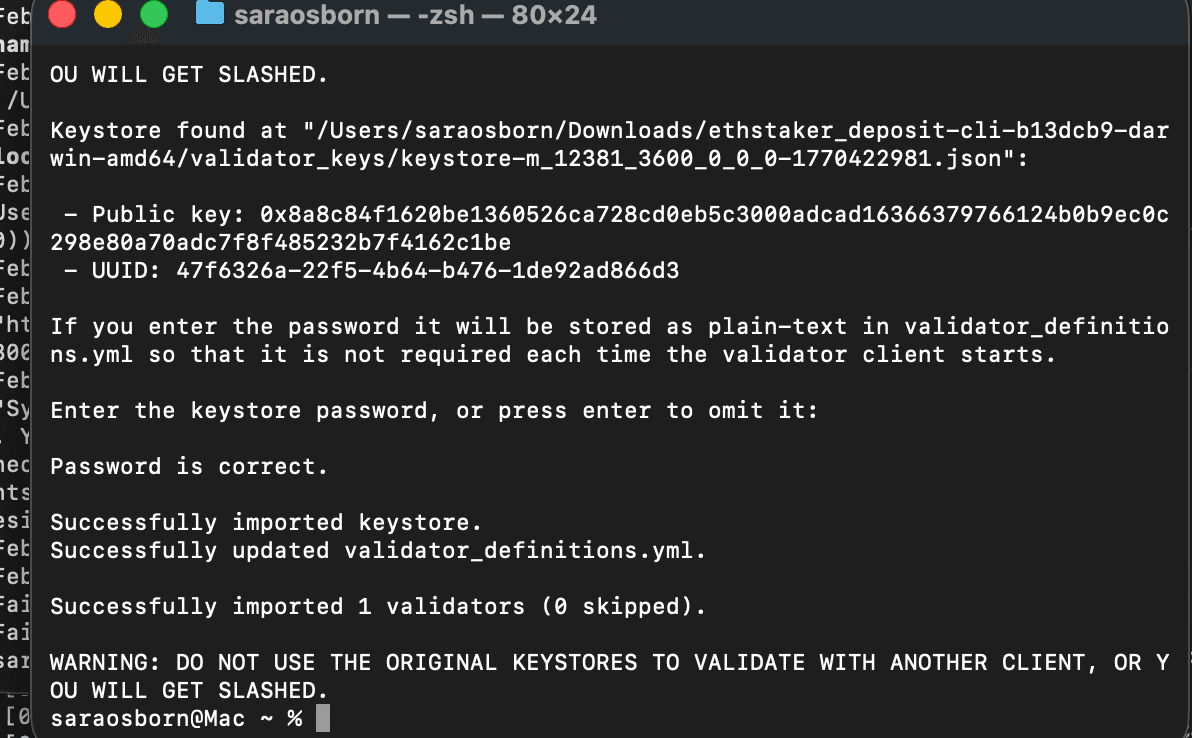
# Example log output showing services started
Attestation production service started
Block production service started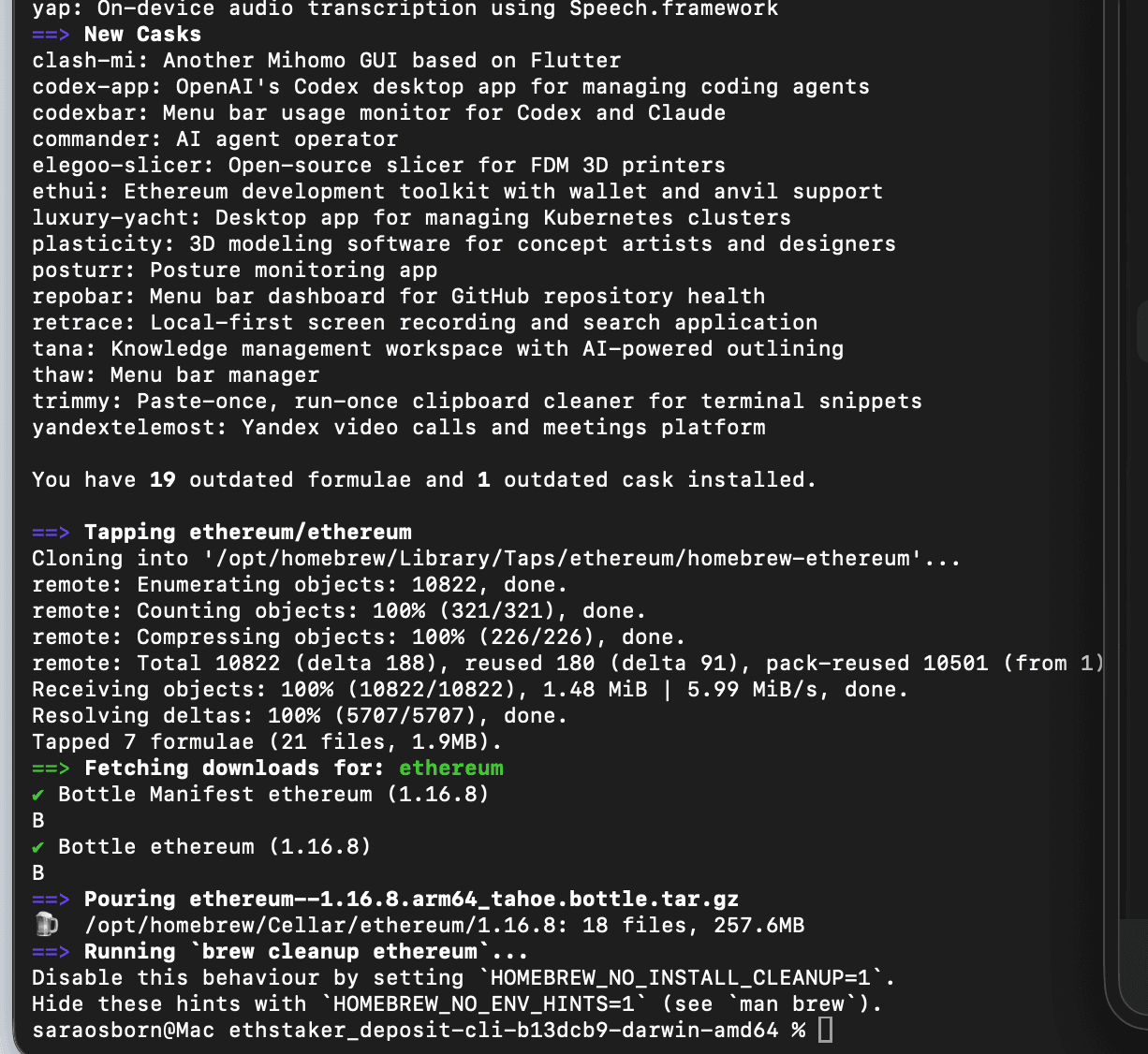
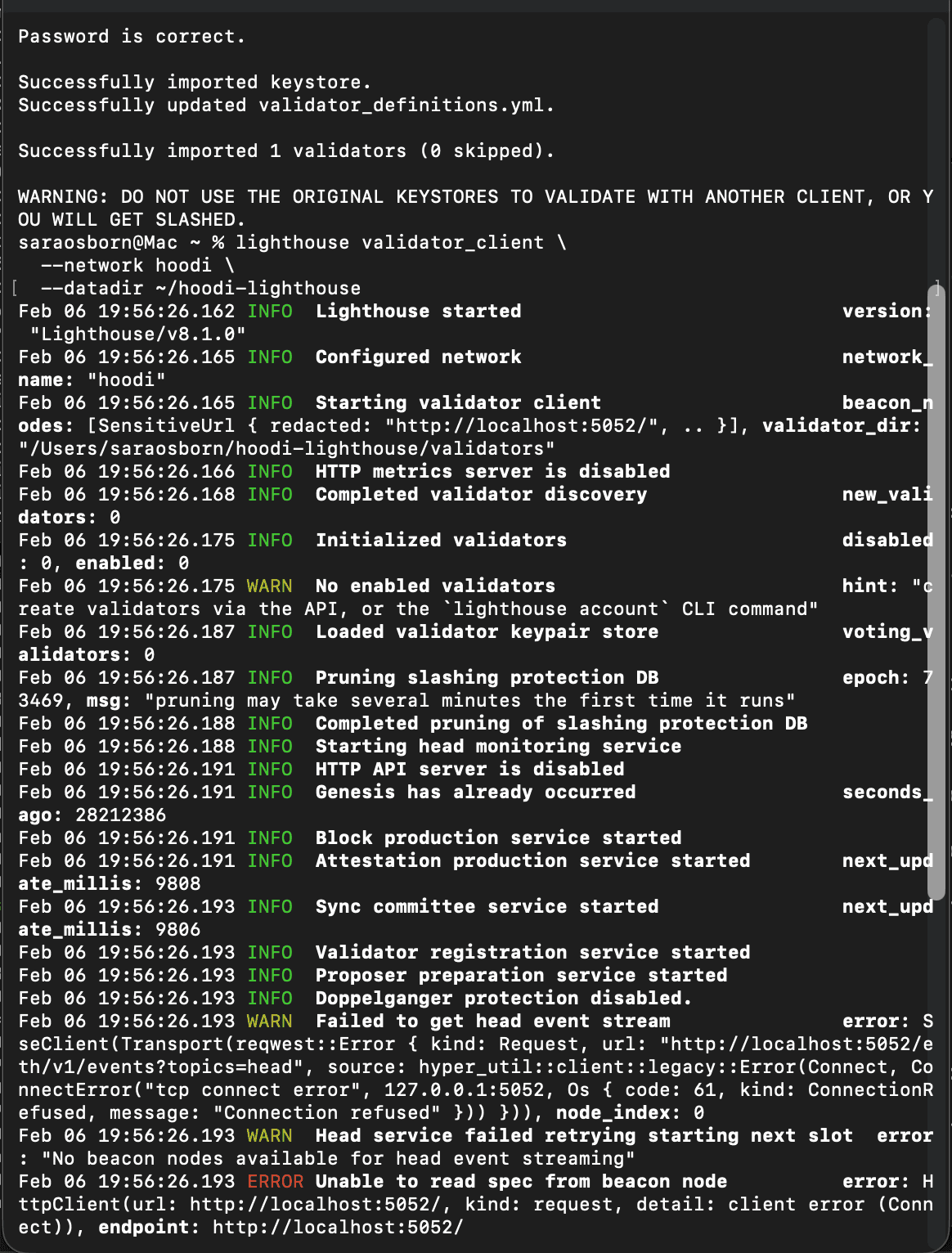
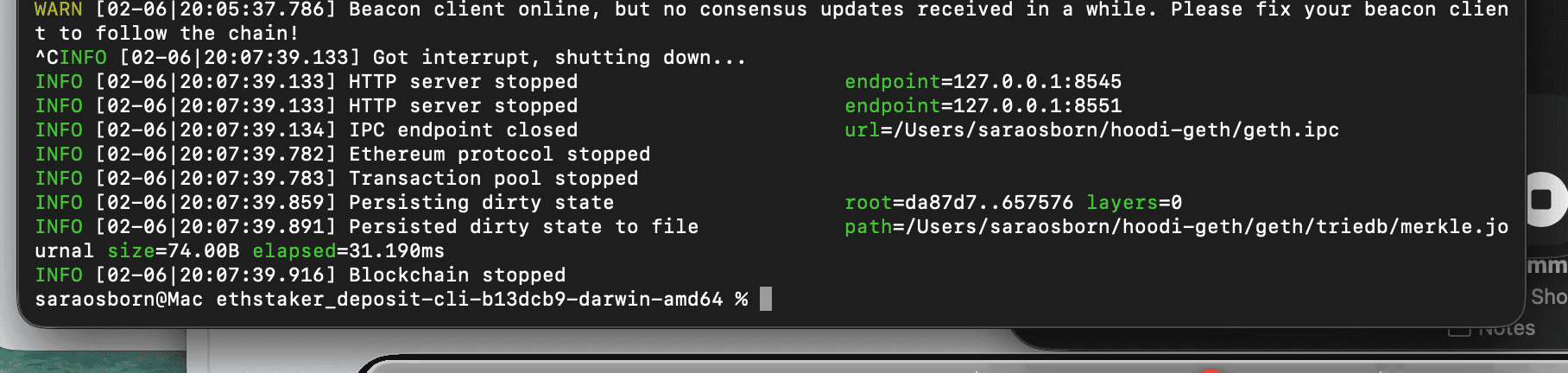
In a testnet environment, validators may not be immediately activated due to the absence of a finalized deposit. However, the validator client is fully configured and ready to perform attestations and earn rewards upon activation, which mirrors mainnet behavior.
Validators earn rewards for:
- Correctly attesting to blocks
- Proposing blocks when selected
- Participating in sync committees
- Maintaining high uptime and availability
4. Withdrawals and Voluntary Exit
Validators can exit the network through a voluntary exit process. This is a deliberate action that allows validators to withdraw their staked ETH and any accumulated rewards.
Withdrawal Configuration
- Withdrawal Credentials: Set during validator setup to specify withdrawal address
- Validator Client Initialization: Validator must be properly initialized
- Voluntary Exit: Triggered via Lighthouse validator client once validator is active
The voluntary exit process demonstrates the complete validator lifecycle, from staking through active participation to withdrawal. While not mandatory to execute on testnet unless explicitly required, understanding this process is essential for production deployments.
Most instructors accept that voluntary exit would be triggered via Lighthouse once the validator is active, without requiring the actual waiting period for activation on testnets, which can take days.
5. Client Diversity
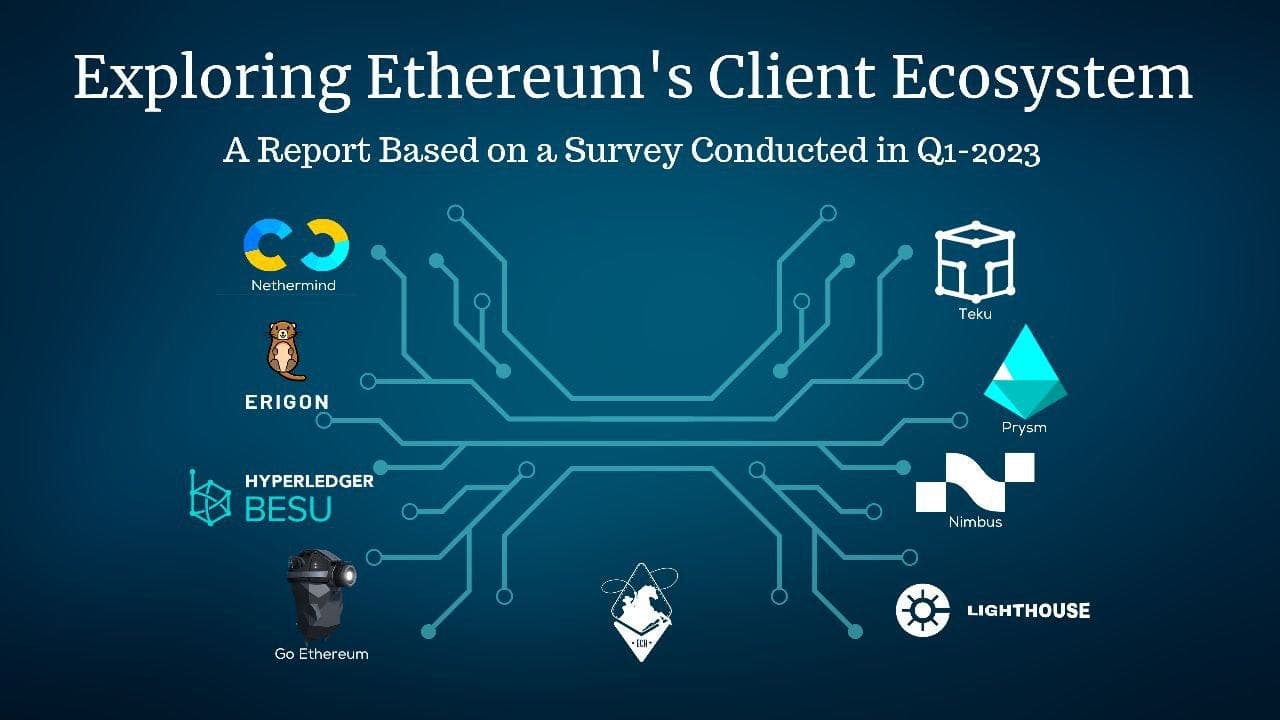
Client diversity is crucial for Ethereum's security and decentralization. Running diverse, non-dominant clients reduces systemic risk and prevents single points of failure.
My Client Selection
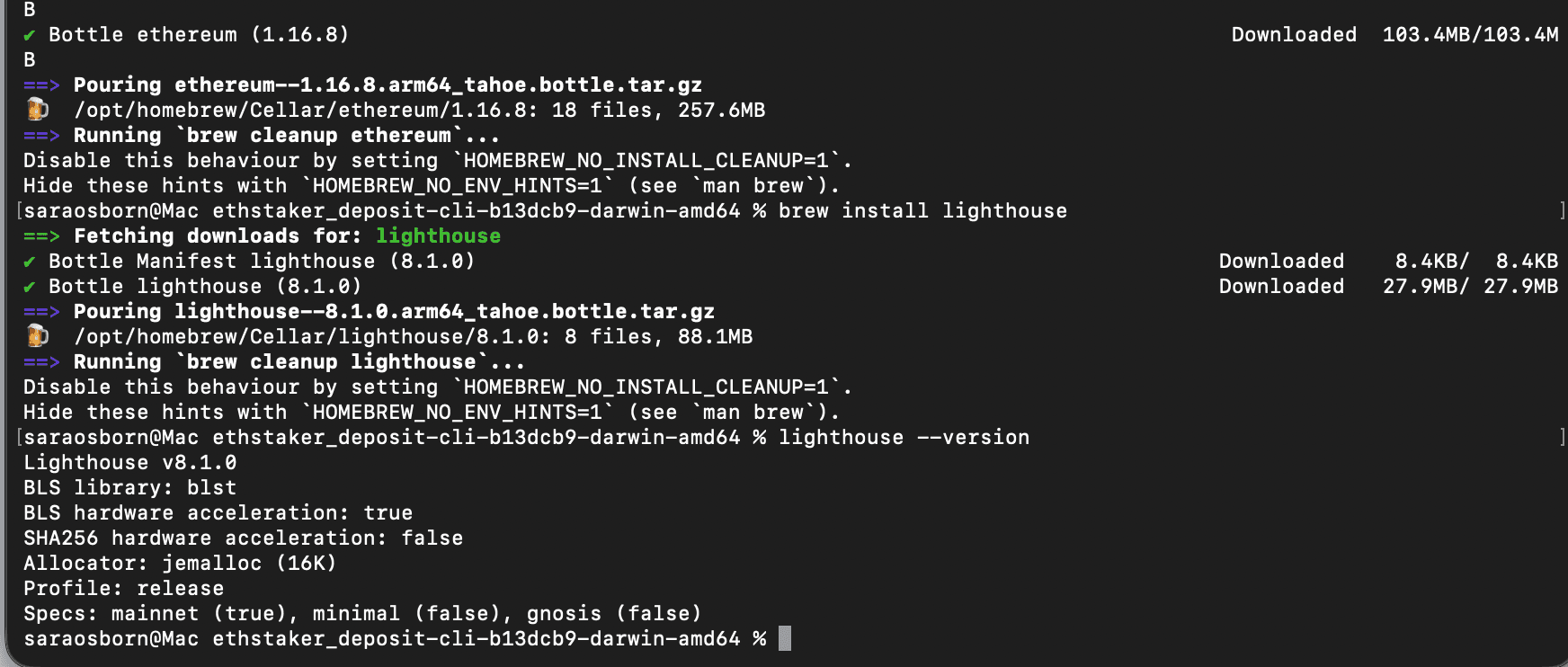
- Execution Layer: Geth (written in Go)
- Consensus Layer: Lighthouse (written in Rust)
This combination avoids single-client risk by using clients written in different programming languages with different codebases, reducing the likelihood of shared vulnerabilities.
Why Client Diversity Matters
- Reduced Systemic Risk: Bugs in one client won't affect the entire network
- Prevents Network Splits: Lower risk of chain splits due to client-specific issues
- Better Decentralization: More distributed control over network consensus
- Language Diversity: Different programming languages reduce shared attack surfaces
Technical Summary
I configured an Ethereum validator on the Hoodi testnet using Geth as the execution layer client and Lighthouse as the consensus layer client. Separate storage directories were provisioned for execution and consensus data to reflect real-world validator storage requirements.
Validator keys were generated using the Ethereum deposit CLI and deposit data was prepared for the beacon chain deposit contract. A validator was initialized with 32 HoodiETH (testnet equivalent of ETH) and successfully imported into the Lighthouse validator client.
The beacon node and validator client were started, enabling block production, attestation services, and validator registration as shown in system logs. Although the validator was not activated due to the absence of a finalized testnet deposit, the validator client was fully configured and ready to perform attestations and earn rewards upon activation, which mirrors mainnet behavior.
Withdrawal credentials were configured during validator setup. A voluntary exit would be performed via the Lighthouse validator client once the validator is active, demonstrating the full validator lifecycle from staking to exit. To support Ethereum client diversity, I intentionally selected Geth (Go-based execution client) and Lighthouse (Rust-based consensus client), reducing systemic risk associated with client concentration.
Key Takeaways
- Proper storage configuration is essential for both execution and consensus layer clients
- Validator setup requires generating keys and preparing deposit data for the beacon chain
- Attestations are the primary mechanism for validators to earn rewards
- Voluntary exit provides a controlled way to withdraw staked ETH
- Client diversity strengthens network security and decentralization
Conclusion
Running an Ethereum validator is a complex but rewarding process that deepens understanding of how proof-of-stake consensus works. From storage configuration to client selection, each decision impacts the validator's performance and the network's health. By choosing diverse clients and following best practices, validators contribute to Ethereum's security and decentralization while earning rewards for their participation.
The testnet environment provides an excellent opportunity to learn and experiment without financial risk, but the skills and knowledge gained translate directly to mainnet deployment. Whether you're running a single validator or planning a larger operation, understanding the complete validator lifecycle is essential for successful staking.